water · 7 min read
Your water is probably fine. Except for these six things.
Most municipal water in the US clears bacterial standards. The contaminants worth filtering for live in a different layer.

Tap water in most American cities tests well for bacterial contamination. That's the easy problem. The harder problem is the slow accumulation of low-level chemical contaminants — the kind that don't make you sick this week but show up in long-term studies.
Six worth filtering for.
1. PFAS ("forever chemicals")
The EWG estimates PFAS contaminate the drinking water of 200+ million Americans. The EPA's new MCLs (maximum contaminant levels) are now in the parts-per-trillion. Most pitcher filters don't touch PFAS. Reverse osmosis does.
2. Lead
Lead pipes are still in service in millions of US homes. The Flint crisis was visible; most lead exposure isn't.
3. Chromium-6
Industrial pollution. Erin Brockovich, basically. RO removes it.
4. Pesticide and herbicide residues
Agricultural runoff. Atrazine especially.
5. Pharmaceutical residues
Antidepressants, hormones, antibiotics. The wastewater system isn't designed to remove them at the molecular scale.
6. Microplastics
Detected in essentially every municipal water supply tested.
What works
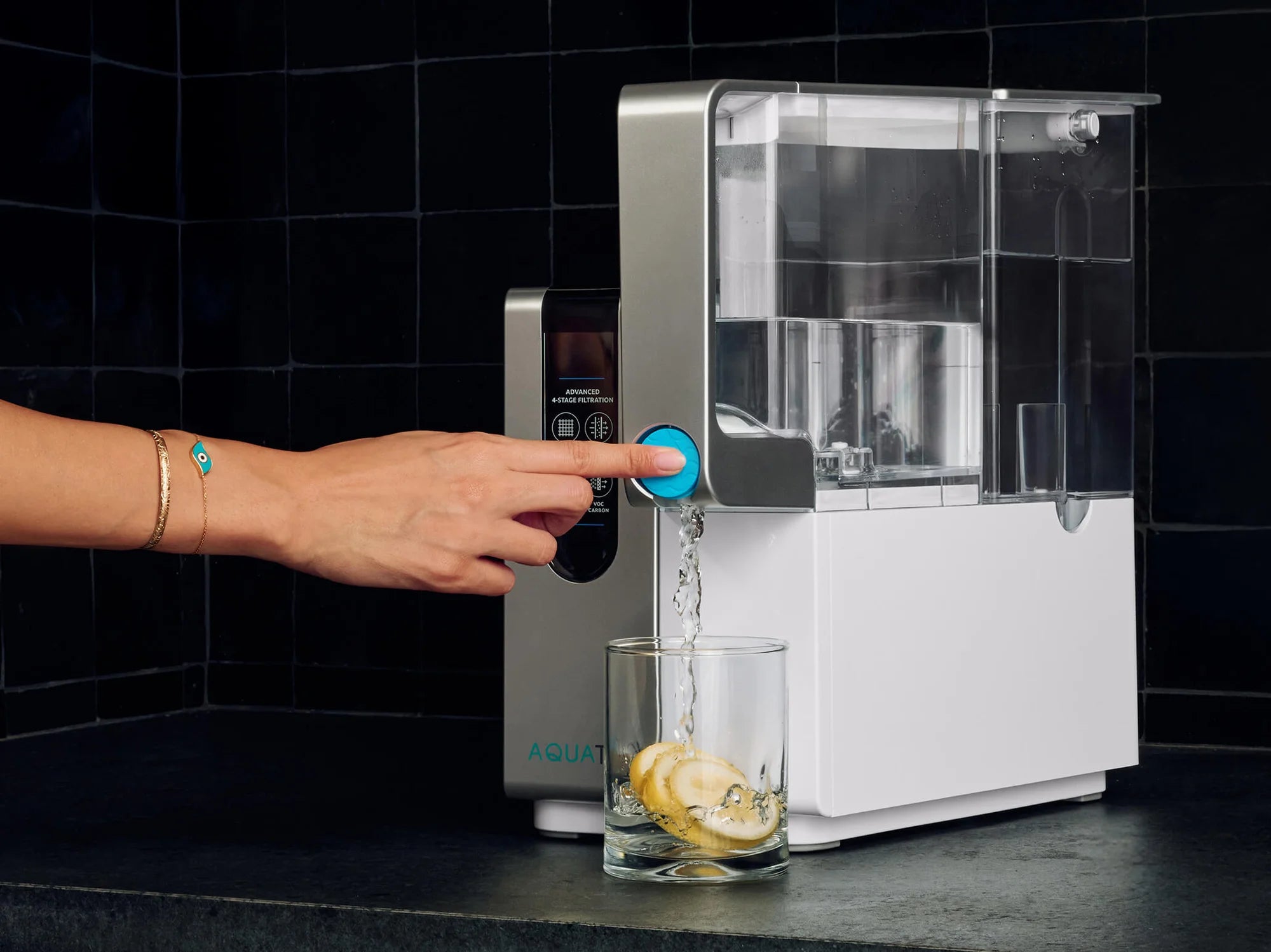
- Reverse osmosis removes all six categories. Countertop systems like AquaTru make it accessible without plumbing.
- Activated carbon block + KDF filters reduce some categories well, others poorly. Good as a step up from a basic Brita; not as good as RO.
- Distillation works but is energy-intensive and removes minerals.
If you do go with RO, add minerals back — either remineralizing cartridges, or a pinch of high-quality sea salt + a squeeze of lemon in your daily water.